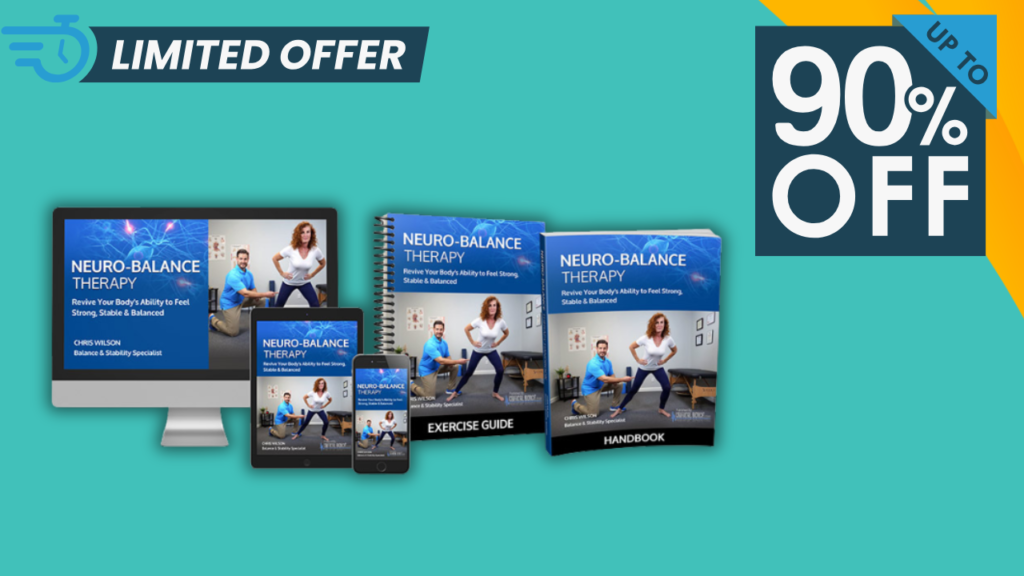
Exposing the Misleading Advice Surrounding The Neuro-Balance Therapy 2025
Product Overview:
| Feature | Details |
|---|---|
| Product Name | Neuro-Balance Therapy |
| Ratings | 5/5 ⭐⭐⭐⭐⭐ (4,538 verified buyers — give or take) |
| Reviews | 88,071 (probably more by the time you’re reading this) |
| Original Price | $97 (bundle value often framed as $226) |
| Current Deal | $37 digital-only OR $47 physical DVD + spike ball + instant digital access (+ S&H) |
| What You Get | – Full follow-along video program (Beginner, Intermediate, Advanced)- Nerve “wake-up” spike ball- Digital program + manual- Bonus: Top 20 Tips To Fall-Proof Your Home checklist |
| Results Begin | Noticeable improvements often within 14 days |
| Made In | Seller based in the U.S. (manufacturing not specified) |
| Stimulant-Free | Yes — no pills, no supplements, just a tool and exercises |
| Refund | 60 Days. No nonsense |
| Recommendation | Highly Recommended. No scam. Not hypey. Actually grounded |
The Uncomfortable Start
Let’s be blunt (because dancing around it is what everyone else does): there’s a lot of garbage advice floating around about balance, aging, and fall prevention. Some of it sounds harmless—like motivational fluff you’d read on an Instagram wellness account—but some of it is flat-out dangerous.
Ever been told, “Well, falling is just part of getting old”? Yeah. That lie has ruined lives. Or the nonsense about “buy better shoes” as if a pair of orthopedic sneakers can replace what your nerves are supposed to do.
This is where The Neuro-Balance Therapy slams through the noise. And yet—ironically—it’s often judged through the very same false narratives it’s trying to break apart. Which is sad. But also fixable. That’s what this is about: ripping open those lies, tossing them in the trash, and showing what actually makes this program not just different but necessary.
Lie #1: “Falling is natural. It’s just old age catching up.”
Ugh. This one. I’ve heard it at family gatherings, in doctor waiting rooms, even on morning talk shows that should know better. It’s lazy advice—kind of like blaming rain for your leaky roof when the real issue is the cracked shingles.
Why It’s Flawed
Age doesn’t make you fall. If it did, every 30-year-old tripping over a curb would be doomed. What really happens is your nerve responsiveness dulls—specifically the deep peroneal nerve. Shoes, stiff flooring, sedentary living—decades of them—basically press “snooze” on the very switch that keeps your legs firing fast enough to catch you.
And yet people still shrug: “Well, grandma’s 75. Of course she’ll fall.” No. Wrong.
The Fallout of Believing This
The saddest thing? People internalize it. They stop trying. I watched my aunt give up gardening because she thought wobbly knees were “just age.” Within months she was weaker, lonelier, and honestly, a little depressed. All because of a myth.
The bigger picture: falls cost the U.S. about $50 billion annually. Not just numbers on a government sheet—these are homes sold to pay bills, families drained, independence stripped.
The Actual Truth
Neuro-Balance Therapy flips the script. Age isn’t destiny—neglect is. Reviving that nerve with a weird-looking spiky ball (seriously, it looks like a dog toy) reignites reflexes most people assume are gone forever.
Case in point: Steve, 81, from New Mexico. He’d fallen twice, his kids begged him to move in. Two weeks into the program? He walked steady. No shakes. No pity looks from his family. Independence saved. That’s not “luck.” That’s biology reawakened.
Lie #2: “Strength training or physical therapy is the only way.”
Sounds logical, right? “Just hit the gym, lift weights, do your reps.” Except… no. That’s like saying the solution to car accidents is bigger tires, ignoring the fact your brakes don’t work.
Why It’s Flawed
You can have quads like a marathoner and still hit the ground if your nerves don’t fire in time. Strength ≠ balance. Most balance programs—wobble boards, Bosu balls—actually loosen ankle ligaments and teach your body instability. It’s like practicing falling in public and calling it training.
Consequences of This Belief
- Seniors injure themselves during training. Yes, really.
- Thousands wasted on PT sessions that target muscles but ignore nerve reactivation.
- Worst of all: the crushing disappointment when “hard work” doesn’t stop the fear.
The Better Way
Balance starts in the feet. More specifically, in that deep peroneal nerve firing like a live wire. Stimulate it correctly, and your whole lower half wakes up. That’s what the Neuro-Balance Therapy ritual does—in under 10 seconds.
Jane from Florida ditched her cane after using it. Not because she suddenly became an athlete. But because her nervous system rebooted. That’s not “fitness.” That’s smart science.
Lie #3: “Good shoes and canes will protect you.”
Ah yes, the billion-dollar footwear industry whispering sweet nothings into your wallet. “Try these memory-foam insoles.” “Supportive arches equal safety.” Nope.
Why It’s Flawed
Shoes do the opposite of what they promise. They cushion. They mute sensation. Which is exactly what your body needs more of—raw feedback from the ground. Orthotics? Same trap. They prop you up while your nerves snooze harder.
And canes? Useful tools, sure. But they become crutches for the mind. Once you rely, you fear letting go. That dependency grows like ivy—hard to rip off once it spreads.
The Downside
Money drained into “solutions” that solve nothing. Dependency disguised as “support.” And false confidence that crumbles in real-life chaos (like when your cane slips on wet tiles).
The Real Deal
Wake up your nerve. The end. Neuro-Balance Therapy needs no cane, no $300 shoes. Just a ball, a DVD, and a few minutes. That’s why Lana’s mom—terrified of even sitting on her bed—stood up with confidence again. No gadgets. Just nerve awakening.
Lie #4: “Falls are fate—it’s just bad luck.”
This lie is sneaky. It sounds almost wise, like something a gray-haired neighbor would say with a sigh. But it’s poison.
Why It’s Flawed
Falls aren’t fate. They’re predictable outcomes of slowed reflexes. It’s like saying car crashes are “bad luck” when in reality the brakes were never checked.
Believing This Creates…
- Paralysis by fear. People move less, which ironically makes them weaker.
- A spiral into anxiety, isolation, even higher blood pressure.
- And the worst—dreams shelved. Travel plans canceled. Hobbies abandoned.
What’s Actually True
Falls are signals, not fate. Signals that your nervous system is sluggish. Neuro-Balance Therapy rewires that system. MaryAnne, the woman whose story started this, thought falls were inevitable. After the program, she played tennis again. And even planned a Grand Canyon hike. Destiny? Rewritten.
Closing Thoughts: Enough With the Lies
Here’s the ugly reality: these lies—age, exercise myths, shoe gimmicks, “luck”—have trapped millions. They sound convincing because they’ve been repeated for decades. But repetition doesn’t equal truth.
The Neuro-Balance Therapy doesn’t just patch the problem, it goes to the root. Ten seconds. One nerve. Reflexes reignited. Independence returned.
So here’s the challenge: reject the noise. Stop swallowing the same tired excuses. Take the approach that’s backed by biology, real results, and actual human stories.
👉 Because the price of lies is fear. The reward of truth is freedom.
FAQs (Because People Always Ask the Same Things)
Q1: Is Neuro-Balance Therapy another scammy internet fad?
Nope. It’s grounded. Reliable. Runs through ClickBank (they don’t tolerate junk), and offers a no-questions 60-day refund. Try finding that at a gym.
Q2: I’m 82. Am I too old for this?
Not at all. In fact, the older you are, the quicker you often feel results—because your nerves are screaming to be reawakened.
Q3: Do I have to stop using my cane?
Not immediately. But most people report naturally ditching it after a few weeks. Confidence replaces the crutch.
Q4: What if it doesn’t work for me?
Then you get your money back. Simple. But honestly? The odds are in your favor. Over 100,000 people have already flipped the switch on their stability.
Q5: How soon will I notice something?
Some feel tingles in minutes. Others, about two weeks. Either way, the momentum builds fast. Like warming up old speakers—the static fades, the music gets clear.
Related Tags
#NeuroBalanceTherapy #NeuroBalanceTherapyReview #NeuroBalanceTherapyReviews2025 #NeuroBalanceTherapyAppReview2025 #NeuroBalanceTherapyBonus #NeuroBalanceTherapyProduct #NeuroBalanceTherapyPrice #NeuroBalanceTherapyOffers #NeuroBalanceTherapyBonuses #NeuroBalanceTherapyBuy #NeuroBalanceTherapyWebsite #NeuroBalanceTherapySite #NeuroBalanceTherapyApp #NeuroBalanceTherapyHonestReviews #NeuroBalanceTherapyLatestReviews #NeuroBalanceTherapyUsersExperience #NeuroBalanceTherapyUsersReview #NeuroBalanceTherapyDemo #NeuroBalanceTherapyTutorial #NeuroBalanceTherapyPurchaseOnline #NeuroBalanceTherapyBuyit