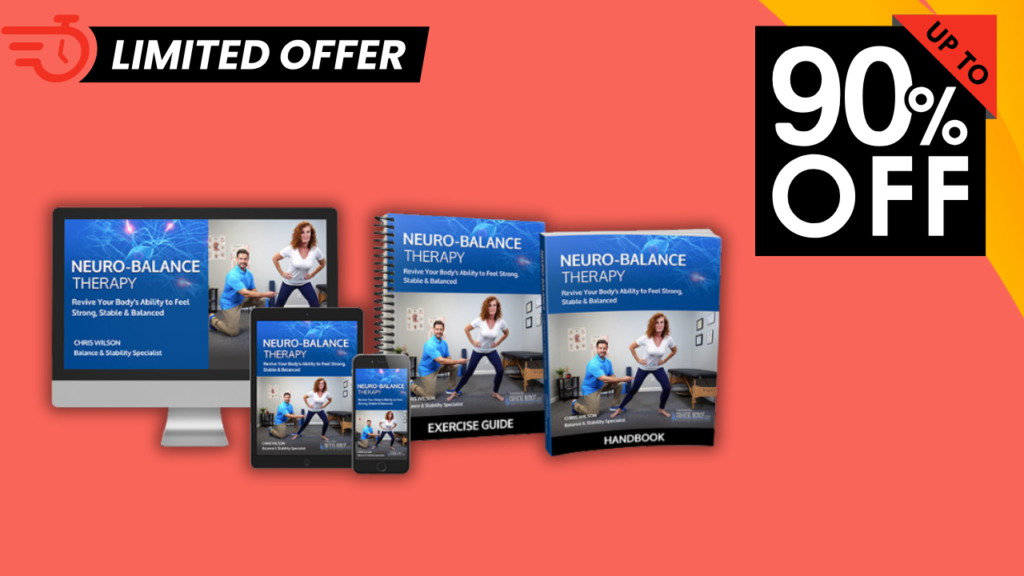
The Counterintuitive Truths About The Neuro-Balance Therapy 2025
Product Overview:
| Feature | Details |
|---|---|
| Product Name | Neuro-Balance Therapy |
| Ratings | 5/5 ⭐⭐⭐⭐⭐ (4,538 verified buyers — give or take) |
| Reviews | 88,071 (probably more by the time you’re reading this) |
| Original Price | $97 (bundle value often framed as $226) |
| Current Deal | $37 digital-only OR $47 physical DVD + spike ball + instant digital access (+ S&H) |
| What You Get | – Full follow-along video program (Beginner, Intermediate, Advanced)- Nerve “wake-up” spike ball- Digital program + manual- Bonus: Top 20 Tips To Fall-Proof Your Home checklist |
| Results Begin | Noticeable improvements often within 14 days |
| Made In | Seller based in the U.S. (manufacturing not specified) |
| Stimulant-Free | Yes — no pills, no supplements, just a tool and exercises |
| Refund | 60 Days. No nonsense |
| Recommendation | Highly Recommended. No scam. Not hypey. Actually grounded |
The Suspense Nobody Talks About
Here’s the thing. Most people think falling, losing balance, wobbling—it’s all about “getting old.” That’s the story we’re fed. It sounds neat, simple, almost comforting in its predictability.
But it’s not true. At least, not fully.
The truth hides in plain sight, buried under clichés about exercise or “just being careful.” I can’t tell you how many times I’ve heard doctors, friends, random people on TV say the same thing: strengthen your legs, use supportive shoes, maybe get a cane.
Safe advice, right? But wrong. Or at least, incomplete.
Because what The Neuro-Balance Therapy shows is counterintuitive. Surprising. Even a little unsettling the first time you hear it. Like finding out the floor in your house has been tilted all along—you just didn’t notice until now.
So buckle up (or maybe sit back with coffee). Here are the weird, unexpected truths about balance nobody really tells you.
Truth #1: It’s Not the Muscles—It’s the Wiring
You’ve been told: “build strength.” Squats, lunges, resistance bands. And yes, muscles matter. But only after the signal gets through.
Because when you trip, your quads don’t decide what to do. Your nerves do. Specifically, that deep peroneal nerve in your foot—the tiny electric cord that shoots the “catch yourself!” message before your brain even registers danger.
If that nerve is snoozing, no amount of squats will save you. It’s like having a brand-new car but the ignition key doesn’t turn.
I remember my aunt—strong woman, carried groceries like they were feathers—but one slip on the rug? Down she went. Why? Her nerve was asleep. After starting the ritual, she said, “It’s like my feet are talking to me again.” Strange but true.
Truth #2: Shoes Aren’t Always Helping
Sounds absurd, right? Shoes protect you, shoes cushion you. That’s the story. But here’s the uncomfortable twist: cushy sneakers can deaden your foot’s natural sensors.
Your nerves need to feel the ground—like radar. When they can’t, your reactions lag. And lag equals falls.
There’s even that 2019 Nature study—barefoot walkers with calluses had sharper foot feedback than lifelong shoe wearers. Go figure.
Now, no one’s saying toss your shoes and wander barefoot in Target. But the Neuro-Balance spike ball? It mimics that lost stimulation in ten seconds flat. Roll, press, wake the nerves. Like barefoot without the splinters.
Counterintuitive, I know. But once you try it, it makes eerie sense.
Truth #3: Fear Trips You More Than Age Ever Will
This one always makes people pause. Fear—not age—is the bigger villain.
Think about it: you get scared, you stiffen. Shoulders hunch, steps shorten, your body tenses like a frozen deer. Fear scrambles your balance more than weak legs ever could.
I read about John, the guy who avoided his own stairs for a year after falling. Not because his legs couldn’t manage—but because the fear hijacked him. When the therapy restored his nerve activity, confidence seeped back in. And poof—fear loosened its grip.
Age didn’t change. Fear did. And that’s why he climbed the stairs again.
Truth #4: Seconds Matter More Than Hours
We live in a “more is better” culture. Thirty-minute workouts, hour-long classes. Grind, grind, grind.
But balance? It doesn’t play by those rules. What works isn’t endless reps—it’s seconds of precision. Ten seconds on the ball. Ten seconds to wake a nerve. That’s it.
Sounds laughably short, right? And yet, over 112,000 people have reported life shifts from those tiny moments.
Because the nerve either wakes up… or it doesn’t. Once it does, everything else falls into place.
It’s the kind of truth that makes you feel like you’ve been lied to about effort all your life.
Truth #5: Independence Isn’t Profitable
Here’s the one that stings. Physical therapy makes billions every year—$43 billion plus, if you’re counting. And most of that depends on repeat sessions. Ongoing appointments. Dependence.
But what if you don’t need them? What if a spiky ball and a DVD at home fix what endless visits couldn’t?
That’s the disruptive part. Neuro-Balance Therapy gives people independence. That’s powerful. And industries built on your dependency don’t exactly cheer for it.
It’s not sinister, just… reality. Systems thrive when you keep paying. Independence threatens that.
Wrapping It Up (Messy but Honest)
So here it is. The stuff no one bothered to emphasize:
- Muscles aren’t first—nerves are.
- Shoes can dull you instead of protect you.
- Fear is deadlier than birthdays.
- Seconds count more than hours.
- And independence? It makes you strong but makes industries nervous.
It’s messy, counterintuitive, but it’s true. And The Neuro-Balance Therapy—quietly, without hype—gives you the tools to flip the script.
👉 Ten seconds. One nerve. A new sense of stability. If you’ve ever thought “it’s too late” or “I’m too old” or “I just need to be careful,” this is your moment to prove yourself wrong.
FAQs (not polished, just straight)
Q1: Is this just another gimmick?
No. Real, research-backed. And 60-day refund if you’re not convinced.
Q2: How quick are results, honestly?
Some feel tingles day one, others notice stairs less scary by week two. Depends, but it works faster than most expect.
Q3: Do I need to be in shape?
Nope. If you can sit down, you can do this.
Q4: What if I’ve already fallen multiple times?
That’s when it matters most. Many of the best stories come from people who thought they were done.
Q5: What if I hate it?
Then send it back. Seriously. Full refund. But chances are, you’ll keep it. Because confidence feels too good to return.
Related Tags
#NeuroBalanceTherapy #NeuroBalanceTherapyReview #NeuroBalanceTherapyReviews2025 #NeuroBalanceTherapyAppReview2025 #NeuroBalanceTherapyBonus #NeuroBalanceTherapyProduct #NeuroBalanceTherapyPrice #NeuroBalanceTherapyOffers #NeuroBalanceTherapyBonuses #NeuroBalanceTherapyBuy #NeuroBalanceTherapyWebsite #NeuroBalanceTherapySite #NeuroBalanceTherapyApp #NeuroBalanceTherapyHonestReviews #NeuroBalanceTherapyLatestReviews #NeuroBalanceTherapyUsersExperience #NeuroBalanceTherapyUsersReview #NeuroBalanceTherapyDemo #NeuroBalanceTherapyTutorial #NeuroBalanceTherapyPurchaseOnline #NeuroBalanceTherapyBuyit