The Don’ts of Neuro-Balance Therapy 2025 – Mistakes That Trip People Up (Literally)
Product Overview:
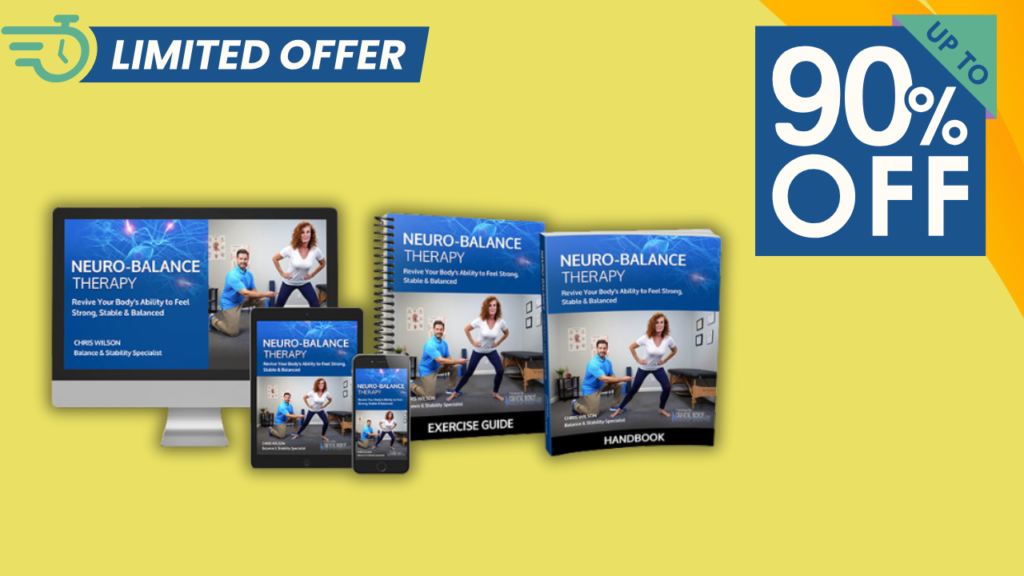
| Feature | Details |
|---|---|
| Product Name | Neuro-Balance Therapy |
| Ratings | 5/5 ⭐⭐⭐⭐⭐ (4,538 verified buyers — give or take) |
| Reviews | 88,071 (probably more by the time you’re reading this) |
| Original Price | $97 (bundle value often framed as $226) |
| Current Deal | $37 digital-only OR $47 physical DVD + spike ball + instant digital access (+ S&H) |
| What You Get | – Full follow-along video program (Beginner, Intermediate, Advanced)- Nerve “wake-up” spike ball- Digital program + manual- Bonus: Top 20 Tips To Fall-Proof Your Home checklist |
| Results Begin | Noticeable improvements often within 14 days |
| Made In | Seller based in the U.S. (manufacturing not specified) |
| Stimulant-Free | Yes — no pills, no supplements, just a tool and exercises |
| Refund | 60 Days. No nonsense |
| Recommendation | Highly Recommended. No scam. Not hypey. Actually grounded |
Why Talking About the Wrong Moves Matters More Than the Right Ones
Ever notice how the news rarely tells you what went right? Nope—it’s always about the crash, the missed shot, the bad call. And strangely, we pay more attention. Maybe because avoiding mistakes feels more urgent than following the perfect script. Same with Neuro-Balance Therapy. Sure, Chris Wilson’s program is straightforward (roll the ball, follow the moves, do it daily). But humans are, well… human. We complicate things. We sabotage ourselves. And sometimes it’s hilarious until it’s not.
Think of it like making pancakes. You can follow the recipe exactly but if you pour salt instead of sugar, congratulations—you’ve ruined breakfast and maybe your entire weekend mood. Balance training is no different. You can nail 90% of it, but one silly misstep (pun fully intended) can keep you stuck.
So let’s get into the juicy stuff: the don’ts. The potholes. The banana peels you should sidestep so you don’t end up wondering why nothing’s working.
🚫 Mistake #1: Treating the Spike Ball Like a Dog Toy (Or Stress Ball)
I know, it looks like something you’d toss to your Labrador. And yes, I’ve heard stories—dogs chasing it across the kitchen, kids playing catch, someone trying to use it on their back. Spoiler: it’s not for that.
The spike ball isn’t a gadget to fidget with during Zoom calls. It’s specifically engineered to wake up the Deep Peroneal Nerve in your foot, that magical wiring that stops you from tripping over the rug. Use it wrong, and you’re basically holding the keys to a Ferrari but refusing to start the engine.
Consequence? No progress, wasted effort, and possibly a chewed-up ball if your pup gets to it first.
Smarter move: put it under your foot. Ten seconds. Follow Chris’s video. Done.
🚫 Mistake #2: The One-And-Done Myth
This one stings because it feels so relatable. You do the ritual once, feel a little buzz in your toes, and go, Ah-ha! Fixed. Except… no. That’s like brushing your teeth on Monday and expecting fresh breath through Friday. Doesn’t work that way.
The nervous system loves repetition. It needs it, craves it. Without it, the nerve goes right back to sleep like a teenager hitting snooze.
Consequence? Frustration. That creeping thought—is this even real?—and eventually, giving up.
Smarter move: Tie the ritual to something you already do daily. Morning coffee? Roll the ball first. TV time at night? Perfect. Make it automatic, like buckling your seatbelt.
🚫 Mistake #3: Killing Progress With Cushy Shoes
Okay, this is sneaky. You do the ritual exactly right, you even feel that awake-foot thing happening, and then you immediately stuff your feet into soft sneakers or memory-foam slippers. And… boom. You muted the signal.
It’s like rewiring your Wi-Fi router and then unplugging it. The nerve you just woke up loses its chance to communicate with the floor.
Consequence? Slower progress, that “meh, nothing’s happening” feeling, and basically wasting your own time.
Smarter move: stay barefoot for a few minutes after. Walk around the kitchen. Feel the tiles, the carpet, the coolness of the wood floor. It’s grounding—literally and figuratively.
🚫 Mistake #4: Trying to Multitask Through It
We’re all guilty of it. Scrolling Instagram, answering emails, watching CNN while the world burns in the background. But Neuro-Balance Therapy isn’t passive like chewing gum—it needs attention.
Why? Because it’s not just foot training, it’s brain-foot connection training. If your brain is busy doomscrolling, it’s not rewiring.
Consequence? Weak results, sloppy form, and boredom because you never actually felt the process.
Smarter move: treat it like a micro-meditation. Ten seconds of breathing, focusing, feeling. It’s less than the time you spend waiting for your phone to unlock with Face ID when it doesn’t recognize you.
🚫 Mistake #5: Letting Fear Dictate Everything
This one’s heavy. I’ve seen it—people start, get nervous, maybe wobble once, and suddenly they think, I can’t. It’s too risky. Fear wins.
But that’s exactly what Neuro-Balance Therapy is designed to fight. Fear of falling keeps you stiff, tight, hesitant. And ironically, that makes you more likely to fall.
Consequence? Staying stuck. Becoming smaller, less independent. Living life on the sidelines when you could be in the game.
Smarter move: acknowledge the fear but don’t quit. Start tiny—just the ball roll. Celebrate the tiniest wins. “I walked to the bathroom without holding the wall.” Those stack up, and before you know it, you’re walking with freedom again.
The Wrap-Up: Mistakes Are Expensive, But Avoidable
Look, nobody’s perfect. We all cut corners. But when it comes to falls, mistakes aren’t funny—they’re costly. Physically, emotionally, financially. And avoidable. Neuro-Balance Therapy is simple, reliable, highly recommended, not a scam. But you’ve got to use it wisely.
So don’t treat the ball like a stress toy. Don’t quit after one try. Don’t suffocate your feet in sneakers. Don’t multitask it away. And please—don’t let fear steer the car.
👉 Start fresh. Smarter. More mindful. Neuro-Balance Therapy works. But only if you don’t get in your own way.
FAQs: The Don’ts People Always Wonder About
1. Can I just swap the spike ball for a tennis ball?
You could… but you’d be wasting your time. Tennis balls are too soft. They don’t hit the nerve right. The custom ball is firm, textured, and weirdly satisfying.
2. What if I skip a week?
Your progress slows. It’s not gone, but it’s like stopping a workout mid-set. You’ll need to restart gently. Consistency is the real secret sauce.
3. Shoes right after—what if I have to leave the house?
Then you do what you must. Life doesn’t pause. But when you can, give your feet 5–10 barefoot minutes to lock in the benefits first.
4. It feels sore—is that bad?
Not usually. Tingling, mild soreness—it means the nerve’s waking up. Sharp pain? Different story. Ease off or check with your doc.
5. Is $47 really all it costs?
Yep. No trick. It used to be $97. Then they stocked thousands more units and dropped the price to clear inventory. Digital option’s even cheaper. Still comes with the bonuses.
Related Tags
#NeuroBalanceTherapy #NeuroBalanceTherapyReview #NeuroBalanceTherapyReviews2025 #NeuroBalanceTherapyAppReview2025 #NeuroBalanceTherapyBonus #NeuroBalanceTherapyProduct #NeuroBalanceTherapyPrice #NeuroBalanceTherapyOffers #NeuroBalanceTherapyBonuses #NeuroBalanceTherapyBuy #NeuroBalanceTherapyWebsite #NeuroBalanceTherapySite #NeuroBalanceTherapyApp #NeuroBalanceTherapyHonestReviews #NeuroBalanceTherapyLatestReviews #NeuroBalanceTherapyUsersExperience #NeuroBalanceTherapyUsersReview #NeuroBalanceTherapyDemo #NeuroBalanceTherapyTutorial #NeuroBalanceTherapyPurchaseOnline #NeuroBalanceTherapyBuyit