The 5 Most Overhyped Myths About Neuro-Balance Therapy 2025
Product Overview:
| Feature | Details |
|---|---|
| Product Name | Neuro-Balance Therapy |
| Ratings | 5/5 ⭐⭐⭐⭐⭐ (4,538 verified buyers — give or take) |
| Reviews | 88,071 (probably more by the time you’re reading this) |
| Original Price | $97 (bundle value often framed as $226) |
| Current Deal | $37 digital-only OR $47 physical DVD + spike ball + instant digital access (+ S&H) |
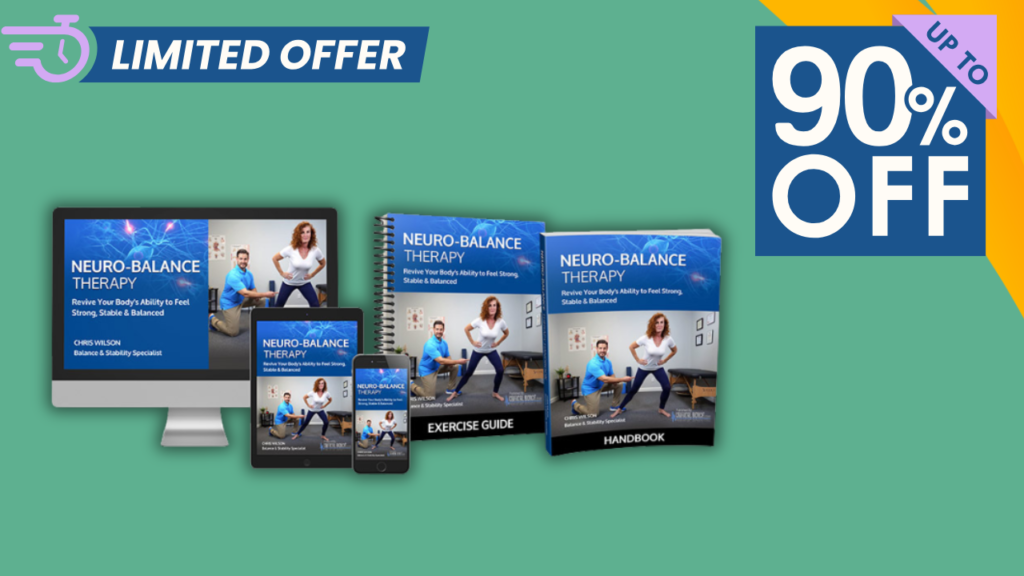
| What You Get | – Full follow-along video program (Beginner, Intermediate, Advanced)- Nerve “wake-up” spike ball- Digital program + manual- Bonus: Top 20 Tips To Fall-Proof Your Home checklist |
| Results Begin | Noticeable improvements often within 14 days |
| Made In | Seller based in the U.S. (manufacturing not specified) |
| Stimulant-Free | Yes — no pills, no supplements, just a tool and exercises |
| Refund | 60 Days. No nonsense |
| Recommendation | Highly Recommended. No scam. Not hypey. Actually grounded |
Let’s Clear the Air: These Myths Are Getting in the Way
We’re so used to getting scammed or let down that when something actually works—especially if it looks simple—we side-eye it hard.
Neuro-Balance Therapy isn’t magic. It’s not some ancient scroll. It’s science, repeated until it sticks. But there’s a problem: it’s been buried under myths, half-truths, and stuff that sounds logical but… isn’t.
So here’s the truth. And not the hyped-up, commercial version. The feet-on-the-floor, socks-off version. Let’s go.
❌ Myth #1: “It’s Just a Fancy Foot Massage.”
What people think:
Looks like one of those reflexology balls from Amazon. Costs more. Same difference.
Why it’s… wrong, actually:
This isn’t about comfort. It’s about activation. That textured little ball? It’s nudging the deep peroneal nerve—a nerve that most people don’t even know exists. But it’s key to balance, posture, and not falling over when you sneeze.
What actually happens:
You stimulate that nerve. That nerve wakes up. Your foot-brain connection sharpens. Balance improves. It’s that simple—and that powerful.
Real-world proof?
People who used to hold onto furniture like it was a lifeline are now climbing stairs without blinking. Diane from Michigan? She cursed the ball the first week. Now she swears by it.
❌ Myth #2: “You Gotta Be Fit for It to Work.”
Why people believe it:
We’re trained to think fitness = progress. If it doesn’t make you sweat or gasp, it must be too easy to matter.
But here’s the twist:
This program was built for people who aren’t doing jumping jacks or yoga poses. You could be 50 lbs overweight, have arthritis in both knees, and still benefit. It doesn’t care how strong you are—just that you try.
The truth:
Balance isn’t about muscle. It’s about messaging. And right now, your nerves might be leaving voicemails no one’s checking. This therapy is the reset button.
❌ Myth #3: “If It’s Real, My Doctor Would’ve Told Me.”
The assumption:
My doctor knows everything, right?
The reality:
Doctors are amazing. But also overworked, insurance-constricted, and trained to treat—not necessarily to prevent or optimize. This isn’t a prescription. It’s a tool. Like flossing. Important, overlooked, and nobody gets rich off telling you to do it.
The better way to think about it:
This isn’t medical intervention. It’s body literacy. You’re learning to speak a forgotten language—one your feet have been mumbling in for years.
❌ Myth #4: “It’s Probably Just Placebo.”
What skeptics say:
“You’re just imagining it’s working.”
How you know that’s BS:
People aren’t “imagining” better footing on stairs. Or less wobble getting out of bed. You don’t placebo your way into standing steadier during a windy grocery parking lot walk.
The real explanation:
Neuroplasticity is a thing. Your body rewires. Reactivating nerves that went dormant from sitting too long, walking wrong, or wearing shoes that look cute but kill your arches? That’s not woo-woo. That’s physiology.
❌ Myth #5: “It’s Too Simple to Matter.”
Sounds familiar, right?
If something’s easy, we assume it’s not worth much.
But honestly?
Simple is underrated. Breathing is simple. So is blinking. So is balance… until it’s gone. This therapy works because it’s not complicated. A textured ball. Some guided movements. Done consistently? That’s how bodies change.
Bottom line:
If it looks too easy—good. That means you’ll actually do it.
So, Are We Done Falling for Nonsense?
The biggest myth of all? That you need to suffer to see progress.
This isn’t suffering. It’s subtle correction. Quiet rewiring. Movement that whispers, “Hey, remember how to feel stable again?”
Neuro-Balance Therapy isn’t a hype machine. It’s a humble little tool with way too much proof behind it to ignore. If you’ve been hesitant—because of myths, or noise, or fear—this is your sign to try the thing that actually makes sense.
Just don’t wait until your next stumble scares you straight.
FAQs
1. Does the spike ball hurt?
A little. But in a “hurts so good” kind of way. Like pressure-release for your nerves.
2. Can I do this if I’m not flexible or active?
Absolutely. This is for you. If you’re already fit, great. If not? Even better.
3. How soon will I see results?
Some say 3 days. Some say 11. Most feel something within 2 weeks.
4. What if I don’t like it?
60-day refund. No stress. No return shipping drama.
5. Will I need to buy anything else later?
Nope. The full therapy comes with your first order. Just don’t lose the ball (your dog might try to claim it).
Related Tags
#NeuroBalanceTherapy #NeuroBalanceTherapyReview #NeuroBalanceTherapyReviews2025 #NeuroBalanceTherapyAppReview2025 #NeuroBalanceTherapyBonus #NeuroBalanceTherapyProduct #NeuroBalanceTherapyPrice #NeuroBalanceTherapyOffers #NeuroBalanceTherapyBonuses #NeuroBalanceTherapyBuy #NeuroBalanceTherapyWebsite #NeuroBalanceTherapySite #NeuroBalanceTherapyApp #NeuroBalanceTherapyHonestReviews #NeuroBalanceTherapyLatestReviews #NeuroBalanceTherapyUsersExperience #NeuroBalanceTherapyUsersReview #NeuroBalanceTherapyDemo #NeuroBalanceTherapyTutorial #NeuroBalanceTherapyPurchaseOnline #NeuroBalanceTherapyBuyit