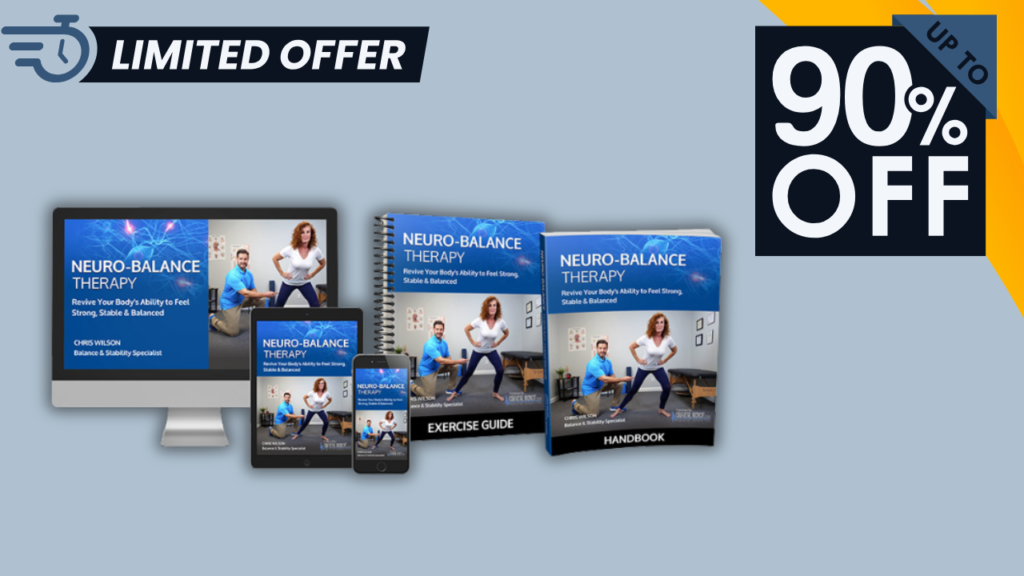
The Hidden Truths of The Neuro-Balance Therapy 2025
Product Overview:
| Feature | Details |
|---|---|
| Product Name | Neuro-Balance Therapy |
| Ratings | 5/5 ⭐⭐⭐⭐⭐ (4,538 verified buyers — give or take) |
| Reviews | 88,071 (probably more by the time you’re reading this) |
| Original Price | $97 (bundle value often framed as $226) |
| Current Deal | $37 digital-only OR $47 physical DVD + spike ball + instant digital access (+ S&H) |
| What You Get | – Full follow-along video program (Beginner, Intermediate, Advanced)- Nerve “wake-up” spike ball- Digital program + manual- Bonus: Top 20 Tips To Fall-Proof Your Home checklist |
| Results Begin | Noticeable improvements often within 14 days |
| Made In | Seller based in the U.S. (manufacturing not specified) |
| Stimulant-Free | Yes — no pills, no supplements, just a tool and exercises |
| Refund | 60 Days. No nonsense |
| Recommendation | Highly Recommended. No scam. Not hypey. Actually grounded |
The Stuff They Don’t Say Out Loud
Every industry hides something. Car companies quietly sit on fuel tricks, cereal brands disguise sugar bombs behind pastel boxes, and don’t even get me started on airline baggage fees (secret strategies everywhere).
And yes—the fall-prevention, “balance therapy” world does this too. There are things they won’t tell you. Not because it’s shady necessarily, but because if you knew… well, you’d stop paying for endless appointments, special shoes, or gimmicky balance boards gathering dust in garages.
The Neuro-Balance Therapy is different—it slips in strategies that feel almost too straightforward. Too obvious. Like, why wasn’t anyone shouting this sooner? Probably because when you solve a problem in ten seconds a day with a rubber ball, entire industries make less money.
So let’s crack it open. 3, 4, maybe 5 truths no one seems to emphasize. The ones hiding in plain sight, waiting to flip your perspective on balance and falling.
Hidden Truth #1: The Deep Peroneal Nerve Is Everything
Funny thing—I used to think balance was about strong legs. My dad did, too. He’d joke about “just doing more squats” whenever he felt shaky (spoiler: he hated squats). But turns out, the magic isn’t in muscles first. It’s in nerves.
Specifically, the deep peroneal nerve. This tiny line of electricity running through your foot and shin is like the Wi-Fi router for your body. When it’s asleep? Good luck. Reflexes lag, slips happen, stairs suddenly feel like cliffs.
Wake it up though, and boom—it’s like upgrading from dial-up to fiber. Instant messages from brain to muscles. “Catch yourself. Adjust. Step steady.”
Why Nobody Talks About It
Because nerves aren’t sexy. You can’t photograph them for Instagram. Gyms can’t charge you for nerve reps. And shoe companies definitely don’t want you to know that their cushy soles deaden nerve feedback like noise-canceling headphones.
How to Use This Secret
The Neuro-Balance Therapy ritual—rolling that oddly comforting spiky ball under your foot for ten seconds—nudges the nerve awake. Over time, the “sleepy wiring” reactivates, and you start feeling grounded again.
Think of MaryAnne, the woman behind the story: from lying terrified on the ground one night to planning hikes. Not because she bench-pressed, but because her nerve remembered its job.
Hidden Truth #2: Reflexes, Not Muscles, Save You
Here’s a blunt fact: when you trip on a rug, you don’t get to pause and flex your quads. Reflexes kick in—or don’t. And that’s the difference between “phew” and “paramedics.”
Most mainstream advice? Build leg strength, strengthen your core, blah blah. Important? Sure. But secondary. Reflexes are milliseconds fast. Muscles are slower.
Why It’s Ignored
Because you can’t really market “reflex training.” There’s no shiny equipment, no big-ticket memberships. Trainers want you squatting. PT clinics want you back weekly. None of them are pushing nerve-speed drills because they don’t look dramatic.
The Neuro-Balance Edge
The program quietly sneaks in reflex training. Nerve wakes up, ankle muscles start twitching to life, micro-adjustments happen faster. You’re basically rehearsing survival without realizing it.
Case in point: CDC data shows falls kill 28,000 older adults annually in the U.S. But studies on “reactive balance training” cut risks nearly in half. Neuro-Balance Therapy is essentially reactive training in disguise—without the lab coats.
Hidden Truth #3: Shoes Might Be the Villain
Okay, this one stings. We love our comfy sneakers. We trust orthotics. But here’s the twist: they’re numbing your foot’s sensors. Too much cushion = less feedback. Less feedback = your body’s internal GPS gets blurry.
It’s like driving with foggy windows. You think you’re stable until the floor tilts a little.
Why It’s Overlooked
Billions of dollars. That’s why. Shoe brands survive on the myth that more cushion = more safety. Orthotic industries thrive on repeat adjustments. If barefoot-style stimulation worked better (and research says it does), these businesses would crumble.
The Better Way
No, you don’t have to run barefoot on gravel like some ultra-marathoner in Kenya. The spiky ball solves this—safely, indoors, controlled. A 2019 Nature study even showed lifelong barefoot walkers had sharper foot sensitivity despite thick calluses. Neuro-Balance just hacked that insight into a living-room-friendly ritual.
Hidden Truth #4: Fear Is the Real Enemy
Not the fall itself. Not even weak muscles. Fear.
When you fear falling, your posture stiffens, your stride shortens, and your brain second-guesses every step. Ironically, this increases your chance of stumbling. It’s the psychological boogeyman making things worse.
Why It’s Ignored
Because you can’t bill “confidence.” Clinics measure bone density, gait length, step count. But how do you measure that moment when someone finally walks across a room without holding onto furniture? Harder to quantify, easier to ignore.
How Neuro-Balance Wins
As the nerve wakes up, you actually feel the difference. Toes grip. Ankles adjust. Suddenly stairs aren’t as terrifying. And with each win, fear melts. Confidence becomes the hidden therapy.
John from Jersey—case study—avoided his own bed upstairs for over a year. Within weeks of Neuro-Balance? Back upstairs. Not because the stairs changed, but because he did.
Hidden Truth #5: Independence Doesn’t Make Them Money
Here’s the uncomfortable truth. The physical therapy industry makes over $43 billion annually. That’s repeat sessions, long-term “maintenance,” endless check-ins. Independence? That’s bad for business.
Neuro-Balance Therapy flips that model. One ball, one DVD, one habit = long-term independence. No recurring fees. No ongoing therapy contracts. And that makes some corners of the industry nervous.
Why This Matters
Because the best-kept secret isn’t a nerve or a ball. It’s the idea that you don’t need someone else forever. Once you know the ritual, you own it. Like brushing your teeth. Simple, boring, priceless.
Wrapping This Messy Truth Together
So there it is. The nerve no one talks about. Reflexes that matter more than muscles. Shoes that sabotage. Fear that multiplies danger. And an industry quietly profiting when you don’t know these things.
And then, sitting calmly in the middle of it all, is The Neuro-Balance Therapy. Ten seconds a day. A ball that looks like a stress toy. A program that restores independence while the mainstream shuffles papers and collects fees.
It’s not magic. It’s clarity. Which, frankly, feels magical when you’ve lived too long in confusion and fear.
👉 If you want the “edge” they don’t advertise, it’s already here. Hidden in plain sight. Waiting under your foot.
FAQs (a little unpolished, but that’s fine)
Q1: Is this another gimmick?
Nope. It’s straightforward, backed by research, and covered by a 60-day guarantee. Hard to scam when refunds are that easy.
Q2: How fast do I feel it?
Some swear day one. Others need a week or two. Think of it like thawing frozen pipes—it takes a little warmth before flow returns.
Q3: Do I need to be fit or flexible?
Not at all. If you can sit and roll a ball under your foot, you qualify.
Q4: I’ve fallen before. Am I too far gone?
Absolutely not. In fact, you might notice the biggest difference because fear has been holding you back more than your body.
Q5: What if it just doesn’t click?
Then you ask for a refund. No guilt. No runaround. But odds are, you’ll keep it once you feel the confidence creeping back.
Related Tags
#NeuroBalanceTherapy #NeuroBalanceTherapyReview #NeuroBalanceTherapyReviews2025 #NeuroBalanceTherapyAppReview2025 #NeuroBalanceTherapyBonus #NeuroBalanceTherapyProduct #NeuroBalanceTherapyPrice #NeuroBalanceTherapyOffers #NeuroBalanceTherapyBonuses #NeuroBalanceTherapyBuy #NeuroBalanceTherapyWebsite #NeuroBalanceTherapySite #NeuroBalanceTherapyApp #NeuroBalanceTherapyHonestReviews #NeuroBalanceTherapyLatestReviews #NeuroBalanceTherapyUsersExperience #NeuroBalanceTherapyUsersReview #NeuroBalanceTherapyDemo #NeuroBalanceTherapyTutorial #NeuroBalanceTherapyPurchaseOnline #NeuroBalanceTherapyBuyit